



2026 Global PVC Foam Board Market Trends: Green Transformation & Growth Analysis
2026-02-132026 Global PVC Foam Board Market: Navigating the Green Transformation
Published: February 2026 | Industry Analysis Report
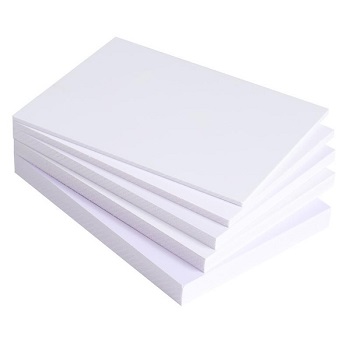
As we move through 2026, the global PVC Foam Board market is experiencing a pivotal shift. No longer just a commodity for signage, it has evolved into a high-performance, sustainable alternative for the construction, automotive, and interior design industries.
I. Market Outlook: Steady Growth and Valuation
The global market is projected to reach approximately USD 2.5 to 2.8 Billion by the end of 2026, maintaining a steady CAGR of 5-6%. This growth is primarily fueled by the "Plastic over Wood" strategy in emerging economies and the rising demand for lightweight materials in electric vehicle (EV) manufacturing.
II. Top Industry Trends in 2026
1. Mandatory Sustainability: Lead-Free & Recycled Content
2026 marks a turning point for environmental compliance. Lead-based stabilizers have been almost entirely phased out in favor of Calcium-Zinc (Ca-Zn) stabilizers. Furthermore, top-tier manufacturers are now offering boards with up to 30%-50% recycled PVC content to meet stringent ESG requirements.
2. Advanced Functional Coatings
Innovation is moving beyond the core. We are seeing a surge in anti-microbial and anti-viral surfaces, specifically designed for healthcare and educational environments. Additionally, enhanced surface tension treatments are allowing for higher-fidelity UV digital printing.
3. Transportation Lightweighting
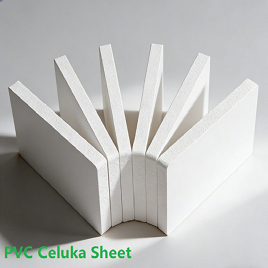
In the push for EV efficiency, low-density celuka foam boards are increasingly used for interior door panels, ceilings, and flooring, providing significant weight reduction without compromising structural integrity.
III. Regional Market Dynamics
| Region | Market Role | 2026 Strategic Focus |
|---|---|---|
| Asia-Pacific | Global Engine | Infrastructure expansion in India & Vietnam; High-end manufacturing in China. |
| Europe | Standard Setter | Strict REACH 2.0 compliance and closed-loop recycling systems. |
| North America | Premium Applications | Demand for high-durability outdoor cabinetry and DIY home improvement. |
IV. Challenges & Strategic Advice
Despite the positive outlook, manufacturers must navigate raw material price volatility and increasing scrutiny regarding microplastics.
"To survive in 2026, companies must pivot from price-based competition to value-added services, such as customized fire-retardant grades and carbon-neutral certification."