

- heroes
- China
- 2 week
- Long-term supply
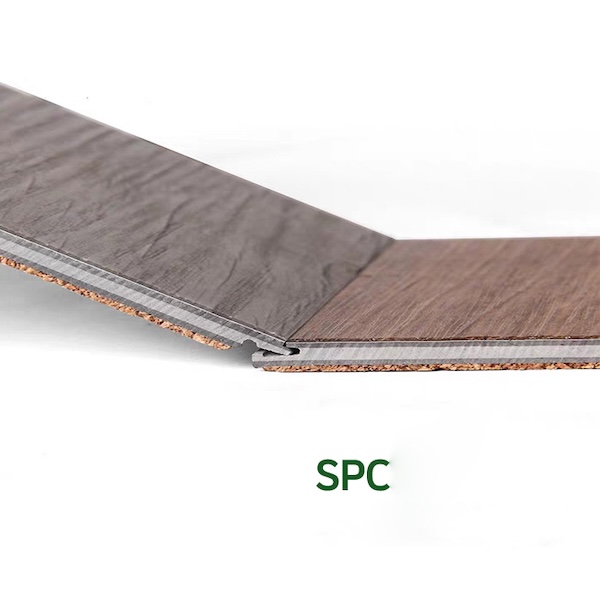
SPC flooring is durable, water-resistant, and low-maintenance—here’s why it’s trusted and how to choose the right type for your space.
Product Features
1. High durability and long-lasting performance due to multi-layer PVC material.
2. Rigid core provides extra stability with no possibility of expansion or contraction.
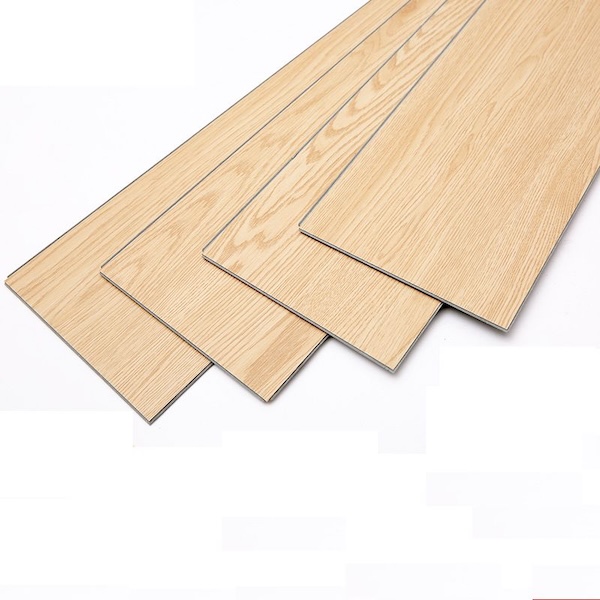
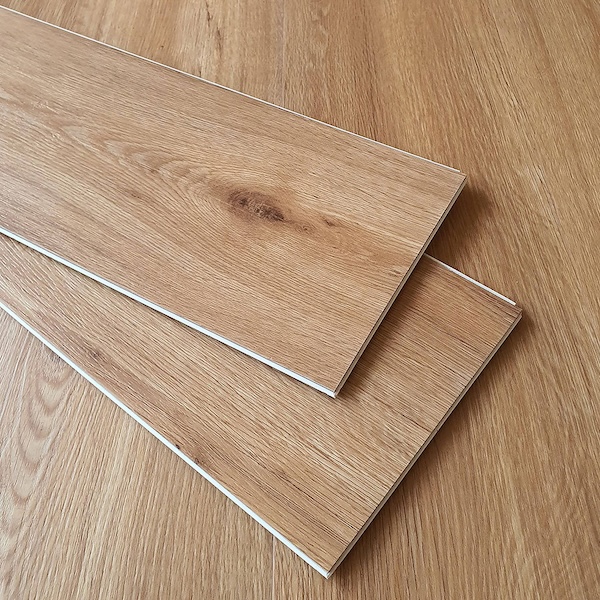
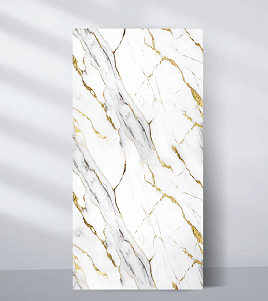
3. Textured surface provides the look and feel of natural wood or stone.
4. Waterproof, ideal for areas prone to moisture or spills.
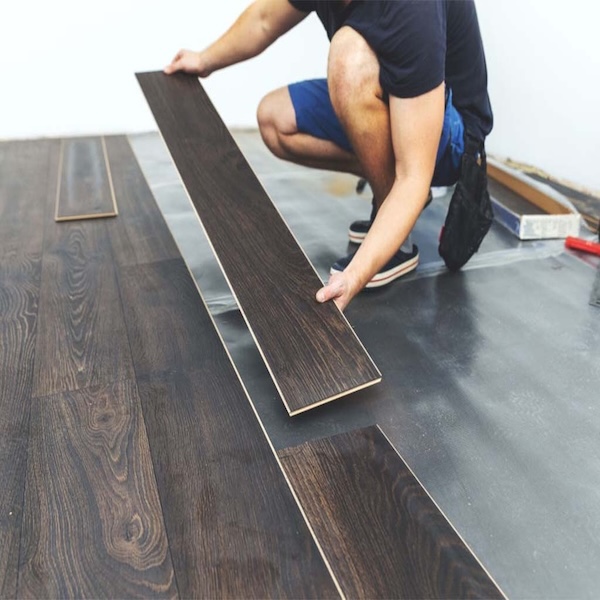
5. Easy installation with click lock system.
6. Low maintenance requirements due to its durability and water resistance.
7. Suitable for residential and commercial use.
8. Available in a variety of styles, colors and patterns.
9. Environmentally friendly and non-toxic.
Application Field
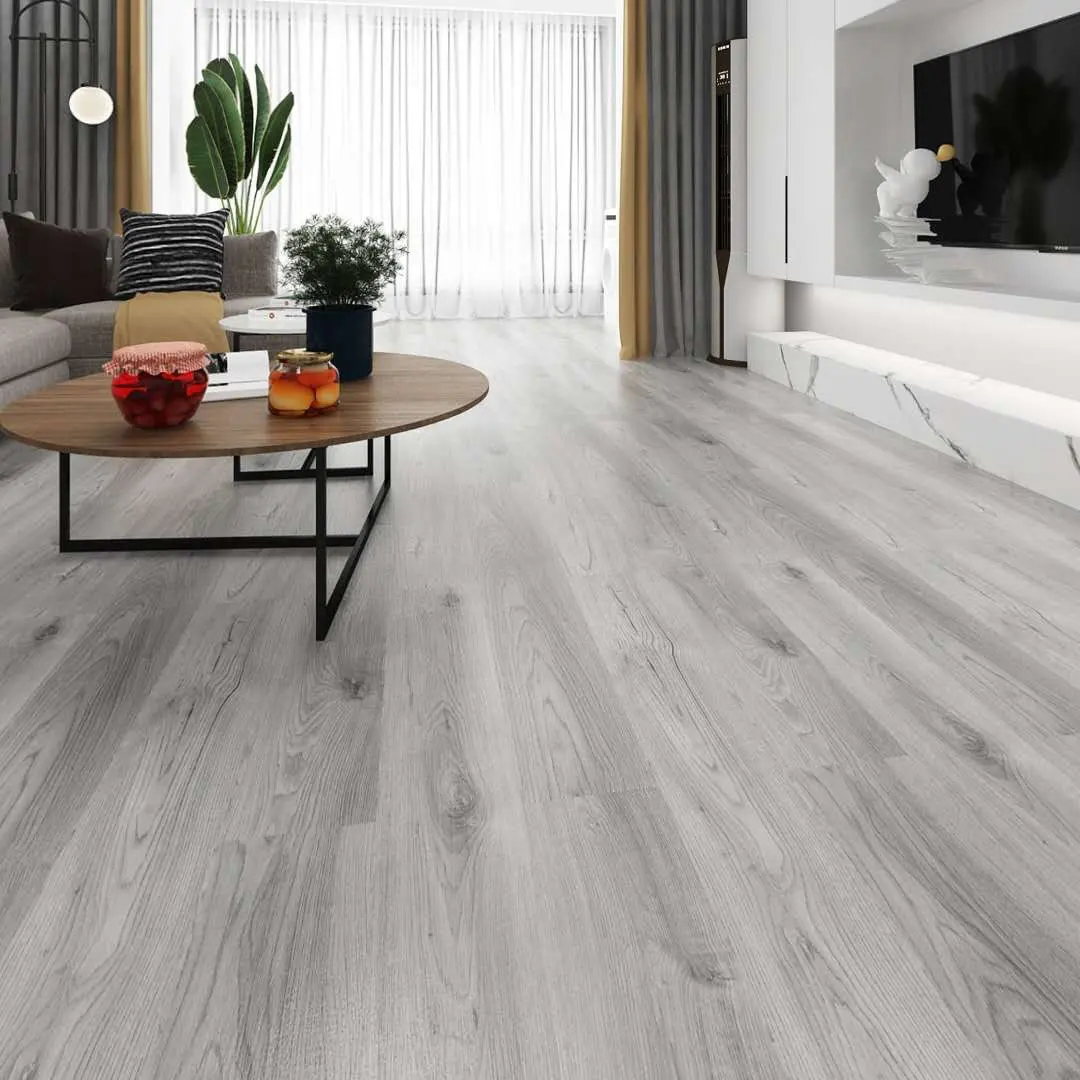
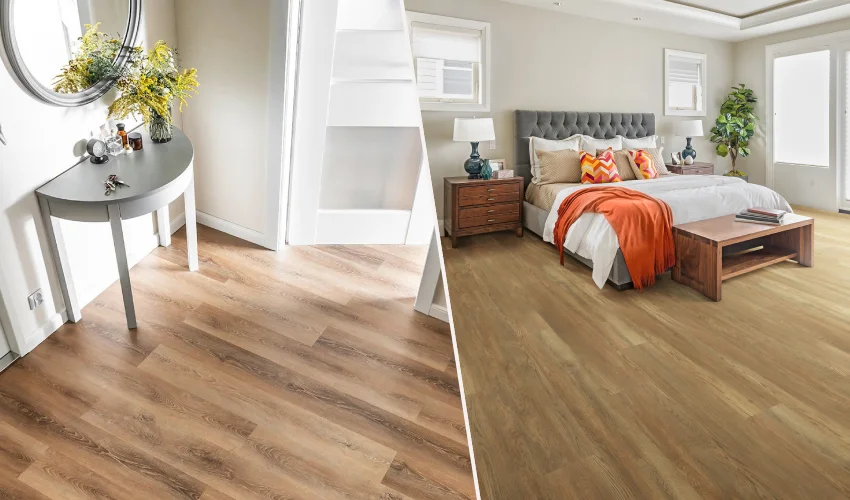
1. Residence, including living room, bedroom and kitchen.
2. Commercial properties such as offices, retail stores and restaurants.
3. Medical institutions, hospitals and laboratories.
4. Educational institutions, including universities, schools, and daycare centers.
5. Public places such as museums, event centers and airports.
6. Hospitality, including hotels, resorts and vacation homes.
7. Industrial spaces such as factories, warehouses and production workshops.
8. Means of transportation such as buses, trains and planes.
9. Sports facilities, such as gymnasiums, dance studios, yoga studios, etc.
Product Ingredients
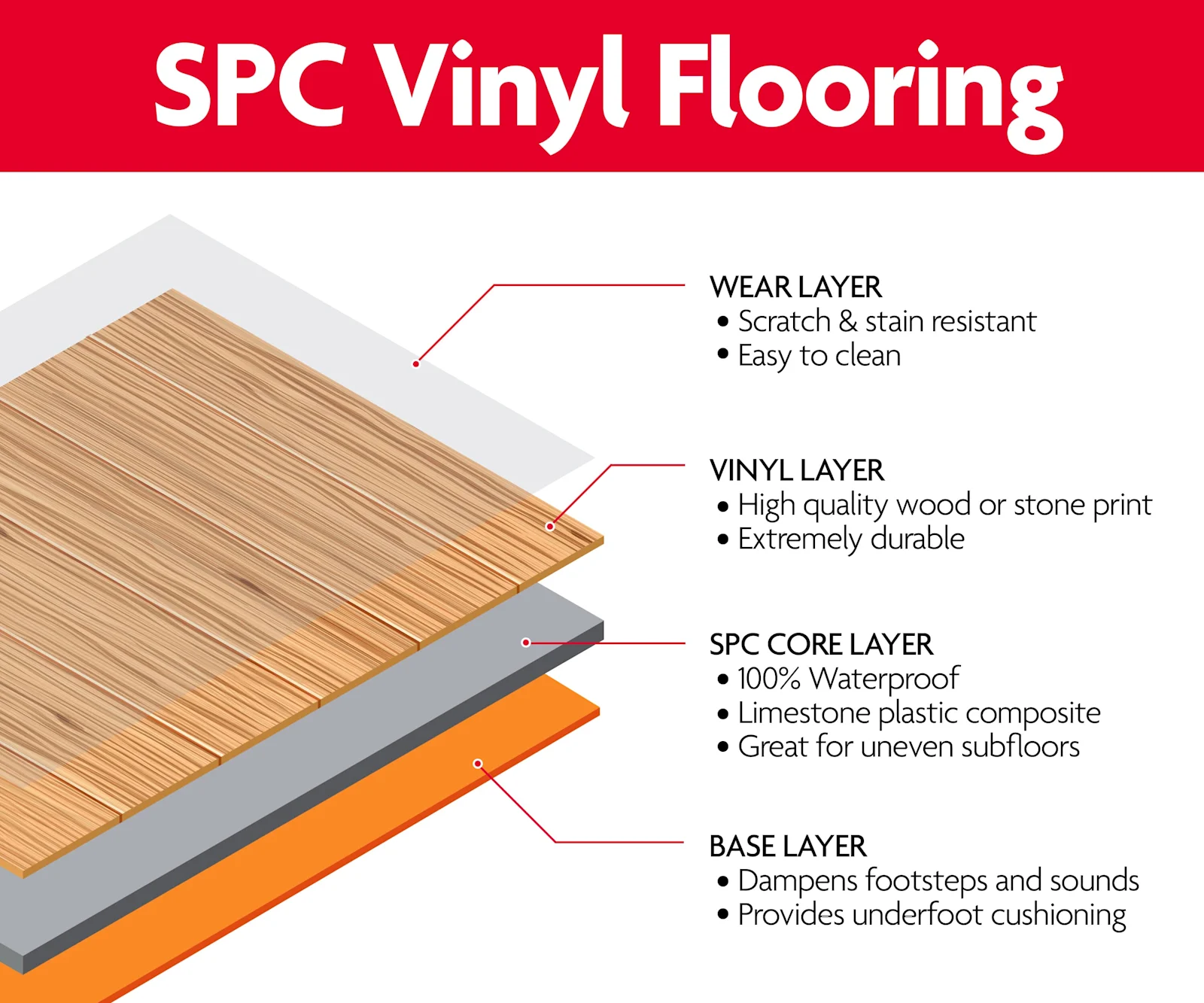
The main components of SPC flooring include wear-resistant layer, vinyl surface layer, SPC core layer and backing layer. The wear layer is the clear layer that protects the vinyl layer from scratches and abrasions. The vinyl topping provides the aesthetic design and color of the floor. The SPC core is made of limestone, PVC and plasticizers for dimensional stability, durability and water resistance. Underlayment is an optional layer that can be added to provide additional sound insulation, moisture protection and comfort to the floor. SPC flooring is a hard core floor, which means it contains no wood or wood derivatives and is 100% waterproof.
SPC floors are usually packaged in cardboard boxes, each containing multiple planks or tiles. The planks/tiles are first individually wrapped in plastic packaging to protect them from moisture and damage during shipping. The wrapped planks/tiles are then neatly stacked in the cardboard box, with possible addition of extra padding to protect corners and edges. Boxes are sealed with strong tape to keep the planks/tiles from shifting during shipping. The size and weight of each box may vary by manufacturer, but they are usually designed to be easily handled and transported with a forklift or hand truck. The product name, style, color and other relevant information are usually marked on the packaging box.