


Why Do PVC Building Formworks Become a New Choice for Green Construction?
2024-11-17Why Do PVC Building Formworks Become a New Choice for Green Construction? A Comprehensive Analysis of Advantages, Applications and Selection Guidelines
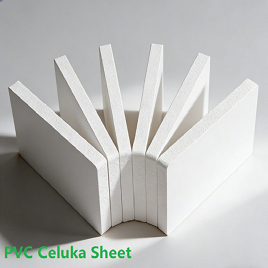
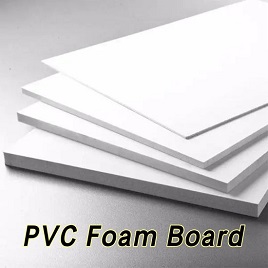
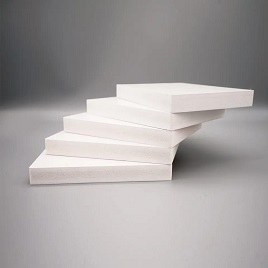
In the development process of the construction industry towards green and low-carbon transformation, the technological innovation of formwork materials has become a core breakthrough to improve construction efficiency and alleviate environmental pressure. As a new type of environmentally friendly building material, PVC building formwork, relying on core advantages such as light weight, high strength, high turnover times and recyclability, is gradually replacing traditional wooden formwork and steel formwork, and is widely used in many fields such as residential construction, municipal engineering and water conservancy facilities. This article will systematically analyze the core advantages of PVC building formwork, its differential characteristics from traditional formwork, applicable application scenarios and key points for selection and construction, providing technical references for industry practitioners to make accurate selections and helping to realize efficient and green construction.
I. Core Advantages of PVC Building Formworks: A Construction Tool Combining Environmental Protection and Efficiency
PVC building formwork is extruded by special processes with polyvinyl chloride (PVC) as the main raw material. Compared with traditional formwork materials, it has significant advantages in environmental performance, economic efficiency and construction convenience, and is an important technical support material for the construction industry to promote the transformation of "replacing wood with plastic".
1. Green and Environmentally Friendly, Recycling Supports Low-Carbon Development
Traditional wooden formwork requires a large amount of wood resources, with a turnover rate of only 4-6 times. After being discarded, it is prone to generating construction waste, causing damage to the ecological environment; although steel formwork has recyclable properties, its production process consumes high energy, is prone to rusting, and has the risk of secondary environmental pollution. PVC building formwork can be processed and prepared from recycled waste PVC materials, realizing resource recycling and "turning waste into treasure". After being discarded, it can be 100% recycled and reprocessed, with no pollutant emissions throughout its life cycle. At the same time, its turnover times can reach more than 30 times, and high-quality products can even increase the turnover times to 150 times, greatly reducing material consumption and complying with the national policy orientation for green building development and circular economy.
2. Light Weight and High Strength, Significantly Improving Construction Efficiency
The density of PVC building formwork is 0.4-0.8g/cm³, and its weight is about 1/7-1/8 of that of steel formwork and 1/3 of that of wooden formwork. It does not require the assistance of hoisting machinery and equipment, and construction personnel can directly carry out handling and installation operations, effectively reducing the labor intensity of construction. In terms of strength performance, its flexural strength can reach more than 22MPa, which can stably bear the pressure of concrete pouring, and has excellent deformation resistance and crack resistance; it also has flame retardant, anti-corrosion, water-resistant and other characteristics, and can be normally constructed under extreme environmental conditions of -20℃ to +60℃, adapting to various engineering projects in different regions and climate conditions.
3. Economical and Durable, Significantly Reducing Comprehensive Costs
Although the one-time purchase cost of PVC building formwork is higher than that of wooden formwork, combined with its high turnover characteristics, the amortized comprehensive use cost has significant advantages. Relevant data shows that the per square meter amortized cost of PVC building formwork is only 1/6 of that of wooden formwork; if used with steel frames, the turnover times can be increased to more than 100 times, and the economy of long-term application is more prominent. In addition, its surface is smooth and flat, and the concrete can meet the fair-faced concrete finishing standard after pouring and forming, without the need for secondary plastering process. This not only saves the cost of auxiliary materials such as cement and sand, but also shortens the construction period, further reducing the comprehensive cost of the project.
4. Flexible Adaptability, Meeting Complex Construction Needs
PVC building formwork has processing characteristics such as being sawable, drillable and nailable, and can be planed, bonded and other processing treatments with reference to wood, which can adapt to the formwork needs of various complex shapes such as cuboids, L-shapes and U-shapes. For special construction scenarios such as special-shaped landscape structures and curved walls, the size of the formwork can be customized through BIM digital design technology to ensure construction accuracy, and the forming effect is better than that of traditional formwork. At the same time, its modular design can realize rapid assembly, the specification of a single formwork can reach 1200mm×600mm, the number of splicing gaps is small, the risk of slurry leakage is reduced, which helps to improve construction quality and operation efficiency.
II. PVC Building Formworks vs. Traditional Formworks: Core Differences at a Glance
To clearly present the performance advantages of PVC building formwork, the following will conduct a multi-dimensional comparative analysis between it and traditional wooden formwork, steel formwork and aluminum formwork, providing a basis for practitioners to make selection decisions:
Comparison with Wooden Formwork: The turnover times of wooden formwork are only 4-8 times, which is prone to moisture absorption, deformation and mildew, requiring frequent replacement and non-recyclable; the turnover times of PVC formwork can reach more than 30 times, with the characteristics of non-absorbent and non-mildew, recyclable and reprocessable, and no need to apply release agent, resulting in better demolding quality.
Comparison with Steel Formwork: Steel formwork is relatively heavy, requiring the assistance of hoisting machinery for operation, prone to rusting and conductivity, and has high demolding difficulty; PVC formwork is light in weight, can be directly operated manually, has corrosion resistance and non-conductivity characteristics, convenient demolding, and lower purchase cost.
Comparison with Aluminum Formwork: Although aluminum formwork is light in weight and has high turnover times, its customization cost is high, making it difficult to adapt to complex shape construction; PVC formwork has better cost performance, can be flexibly customized in size, and has more prominent corrosion resistance, suitable for construction scenarios in humid and corrosive environments.
III. Applicable Scenarios of PVC Building Formworks: Projects Where They Are More Cost-Effective
Based on the above core advantages, PVC building formwork has good application performance in many construction fields, especially suitable for the following scenarios:
Civil Construction Projects: Suitable for projects with many standard floors such as high-rise residential buildings and commercial complexes. Its high turnover characteristics can maximize the reduction of material costs, and the rapid turnover efficiency of 5 days per floor can significantly shorten the total construction period of the project.
Infrastructure Projects: Suitable for projects in humid and corrosive environments such as bridges, tunnels and water conservancy projects. Its excellent waterproof and anti-corrosion performance can effectively extend the service life of the formwork and reduce later maintenance costs.
Special Environment Construction: Suitable for long-term humid areas such as basements, kitchens and bathrooms, as well as places with strong corrosion such as industrial plants. It can avoid the defects of easy deformation and rusting of traditional formwork, ensuring that the construction quality meets the standards.
Special-Shaped and Customized Projects: Suitable for the construction of special-shaped structures such as park concrete sculptures and curved walls. High-precision pouring operations can be realized through customized PVC formwork, with excellent forming effect and controllable cost.
IV. Key Points for Selection and Construction of PVC Building Formworks
1. Key Selection Points
Pay Attention to Core Technical Parameters: Prioritize the selection of products with flexural strength ≥22MPa and applicable temperature range of -20℃ to +60℃, and verify the turnover index promised by the manufacturer to avoid the impact of low-cost and low-quality products on construction quality.
Verify Manufacturer's Qualification and Strength: Choose manufacturers with mature technology and rich successful cases, and prioritize verifying whether the products comply with relevant industry standards such as "Technical Specification for PVC Composite Plastic Formwork DB37/T 5050-2015" to ensure that the product quality meets the standards.
Confirm Recycling System Policy: Clarify the recycling policy and recycling price standard of waste formwork with the manufacturer in advance to further reduce the comprehensive cost of the project and practice the concept of green and environmental protection development.
2. Construction Precautions
Scientifically Plan Formwork Layout: Avoid random cutting of PVC formwork. For irregular construction areas, manufacturer customization or plywood supplementary splicing can be adopted to reduce the material loss rate.
Reasonably Reserve Expansion Gaps: The thermal expansion coefficient of PVC material is relatively large. During construction, it is necessary to adjust and reserve an expansion gap of about 1mm according to the ambient temperature; the reservation process can be omitted during construction in high-temperature periods to prevent the formwork from deformation due to thermal expansion and contraction.
Standardize Support and Reinforcement Operations: When pouring concrete walls, it is necessary to set up 4 horizontal back ridges for support and reinforcement according to the standard of every 120cm height. The spacing of tie bolts must strictly follow the construction specification requirements to ensure the stability of the formwork support system and avoid quality problems such as formwork expansion and explosion.
Avoid Edge Damage Risks: When drilling and nailing operations, ensure that the operation point is at least 10mm away from the edge of the formwork to prevent cracking at the edge of the formwork, which will affect the strength performance and service life of the formwork.
V. Conclusion: PVC Building Formworks Lead the New Trend of Green Transformation in the Construction Industry
With the continuous improvement of the country's attention to the field of green buildings and circular economy, PVC building formwork, relying on its core advantages of environmental protection, efficiency, economy and flexibility, is gradually becoming the mainstream development trend of the building formwork industry. Whether it is reducing construction costs, improving construction efficiency, or fulfilling environmental responsibilities and promoting industrial transformation and upgrading, PVC building formwork has shown irreplaceable application value.
For construction enterprises and construction units, accurately selecting high-quality PVC building formwork and strictly standardizing the construction process can not only improve the quality and efficiency of engineering projects, but also help realize the goal of sustainable industrial development. In the future, with the continuous upgrading of technology, the application scenarios of PVC building formwork will be further expanded, injecting stronger impetus into the green transformation of the construction industry.