


PVC Foam Board Safety: Usage Guidelines, Risks & Buying Guide
2026-01-24PVC Foam Board Safety: Usage Guidelines, Risks & Buying Guide
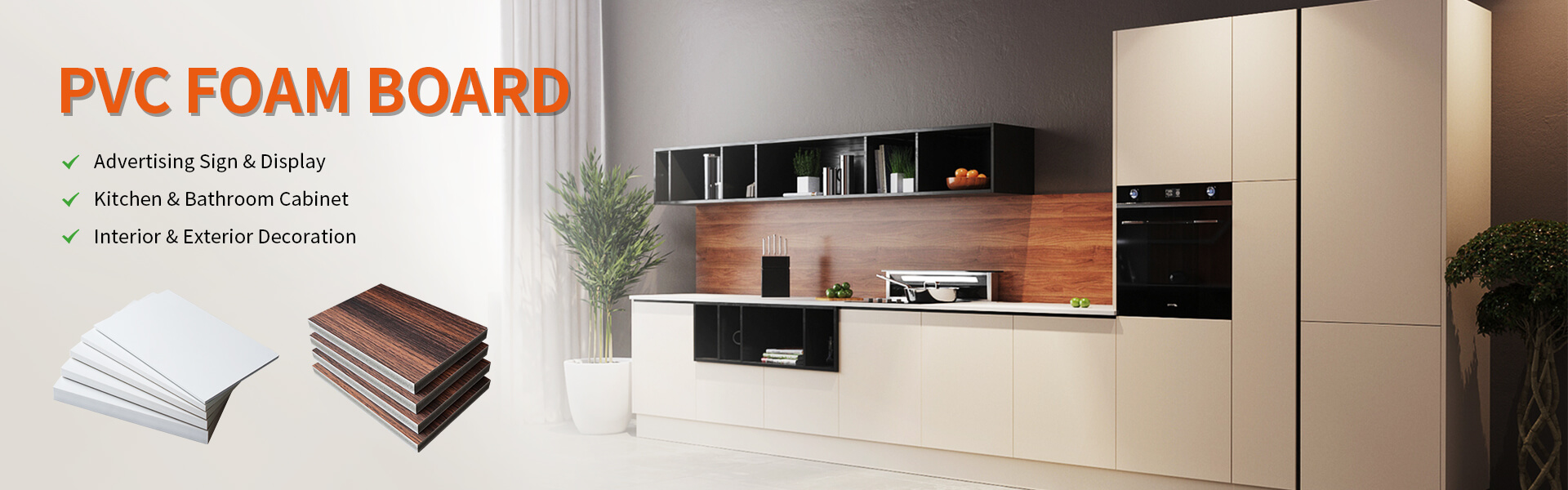
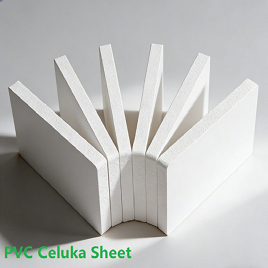
PVC foam board is a versatile lightweight panel widely used in interior decoration, industrial applications, and crafting. When used in compliance with safety standards, PVC foam board is generally harmless to humans, but its safety depends on three critical factors: high-quality raw materials, standardized production processes, and proper application scenarios. As a populareco-friendly PVC foam board option, it is made from polyvinyl chloride (PVC) as the core material, blended with foaming agents, stabilizers, and other additives, and formed via high-temperature extrusion or compression molding. PVC exhibits stable chemical properties at room temperature, remaining non-decomposable and not actively releasing harmful substances. To ensure safe use of PVC foam board for indoor use and other scenarios, a comprehensive evaluation of these three key aspects is essential.
Raw Material Quality: The Foundation of Safety
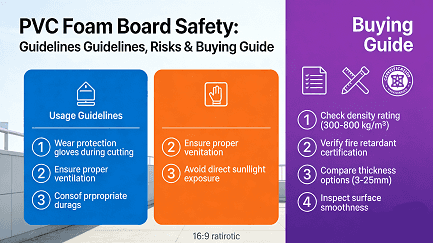
High-quality PVC foam board is crafted from food-grade or eco-friendly PVC resin, with strict controls on heavy metal (lead, cadmium) and phthalate plasticizer contents to eliminate safety risks at the source. In contrast, low-quality PVC foam board made from recycled materials often contains excessive impurities. These impurities can trigger the release of trace harmful substances when the board is exposed to high temperatures, humid conditions, or long-term friction. Non-eco plasticizers may disrupt the human endocrine system, while excessive heavy metals can impact health through skin contact or inhalation. For safe use, especially when choosing PVC foam board for home decoration, always prioritize products that meet GB/T 20497-2006 standards, EU RoHS, and REACH certifications—these credentials confirm compliance with global safety benchmarks.
Production Technology: A Direct Factor in Harmful Substance Emission
Standardized production processes are pivotal to minimizing harmful substance emissions from PVC foam board. Reputable manufacturers use precision temperature-controlled high-temperature foaming technology, ensuring full PVC plasticization and the formation of a uniform closed-cell structure. This closed-cell design not only boosts closed-cell PVC foam board’s strength and sound insulation but also securely locks in internal additives, reducing volatile organic compound (VOC) release. Conversely, shoddy production—such as improper temperature control or insufficient foaming—leaves unreacted additives in the board or creates an open-cell structure that accelerates volatilization. Some manufacturers also over-add foaming agents and stabilizers to cut costs, further compromising the safety of industrial PVC foam board and decorative variants.
Application Scenarios: The Key to Avoiding Hazards
Application scenarios directly influence whetherPVC foam board poses health or safety risks. In interior design, PVC foam board for ceiling and wall cladding is commonly used for its durability and versatility. For humid areas like kitchens and bathrooms, choose waterproof PVC foam board with a water absorption rate ≤ 0.5% to prevent internal additives from seeping out due to prolonged moisture exposure. Avoid placing PVC foam board for furniture making near high-temperature sources (heaters, ovens) or direct sunlight, as extreme heat can cause PVC decomposition, releasing irritating gases like hydrogen chloride. In industrial settings—such as billboard production and exhibition stands—opt for flame-retardant PVC foam board compliant with GB/T 8624-2012 to mitigate fire hazards.
Additional Safety Measures
To maximize PVC foam board safety, follow these four practical measures: 1) Purchase PVC foam board through authorized dealers and verify test reports, focusing on heavy metals, plasticizers, and VOC levels—key indicators for safe use. 2) Ensure adequate ventilation during PVC foam board installation and avoid large-scale installation in enclosed spaces to reduce VOC accumulation. 3) Regularly clean PVC foam board surfaces to remove dust, which can adsorb harmful substances and transfer them to contact points. 4) Refrain from scratching PVC foam board with sharp tools, as damaged protective layers increase additive volatilization.
PVC Foam Board Price & Buying Recommendations
The price of PVC foam board varies based on thickness, density, and brand reputation. Ordinary decorative PVC foam board (3-10mm thick) ranges from 20-80 yuan per square meter, while high-density industrial-grade PVC foam board (10-30mm thick) costs 100-300 yuan per square meter. When buying PVC foam board for commercial use or home projects, select specifications tailored to your application scenario—decorative projects for homes vs. heavy-duty industrial use. Prioritize certified PVC foam board from manufacturers with ISO 9001 quality management and ISO 14001 environmental certifications, as these brands consistently deliver safe, durable products.