


PVC board advertisement production
2024-11-171. Overview of PVC Board for Advertising
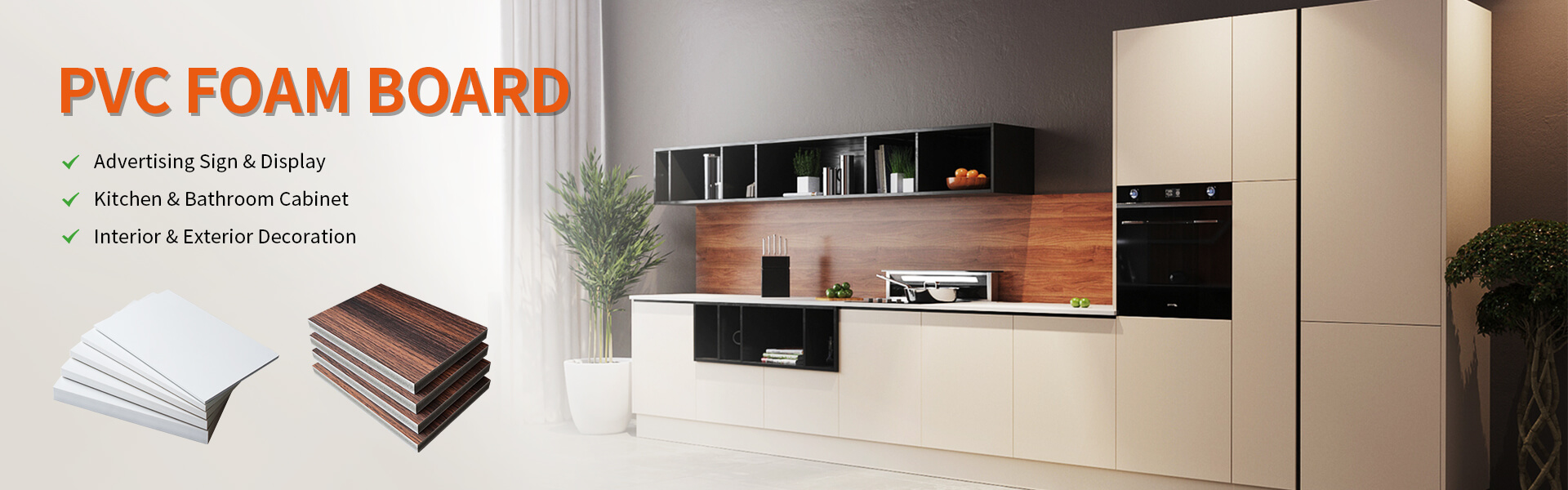
PVC (Polyvinyl Chloride) board is a widely used material in the advertising industry, favored for its excellent performance and cost-effectiveness. It is a rigid board made of PVC resin as the main raw material, added with appropriate additives and processed through extrusion or calendering. In advertising production, common types include foam PVC board (also known as PVC foam board, with light weight and good thermal insulation), solid PVC board (high density, strong impact resistance), and hollow PVC board (lightweight, sound insulation, suitable for large-area hanging signs).
The core advantages of PVC board in advertising applications are: good weather resistance, able to resist UV radiation, rain, and temperature changes without easy fading or deformation; strong machinability, easy to cut, carve, bend, and bond; smooth surface, suitable for various printing processes; non-toxic, environmentally friendly (compliant with national environmental standards) and recyclable; and moderate price, which balances performance and cost compared to other advertising materials (such as acrylic, aluminum composite panels).
2. Pre-Production Preparation
2.1 Demand Confirmation & Design Planning
First, clarify the core requirements of the advertisement, including the application scenario (outdoor billboards, indoor display boards, store signs, exhibition booths, etc.), size specifications (length, width, thickness), display content (text, images, logos), and service life (temporary promotion or long-term display). Based on these requirements, the design team conducts creative planning: the layout should be concise and eye-catching, the color matching should conform to the brand image and the visual effect of the scene, and the text should be clear and easy to read (especially for outdoor advertisements, the font size should be appropriate to ensure readability at a distance).
It should be noted that when designing for outdoor PVC board advertisements, the color mode should be set to CMYK (printing standard) instead of RGB (screen display standard) to avoid color deviation during printing. At the same time, reserve a certain bleeding edge (usually 3-5mm) to prevent incomplete content due to cutting errors.
2.2 Material Selection
Select the appropriate type and thickness of PVC board according to the application scenario and demand:
Outdoor billboards/large signs: Choose foam PVC board with a thickness of 10-20mm or solid PVC board (5-10mm) for better wind resistance and durability. It is recommended to select products with UV-resistant additives to extend the anti-fading period.
Indoor display boards/store signs: Foam PVC board with a thickness of 3-8mm can be used, which is lightweight and easy to install; if a high-gloss effect is required, solid PVC board with a smooth surface can be selected.
Temporary promotions (such as exhibition booths, event signs): Hollow PVC board (2-5mm) is preferred, which is lightweight, easy to carry and install, and cost-effective.
In addition, check the quality of the PVC board when purchasing: the surface should be flat, free of bubbles, scratches, or uneven color; the edge should be neat without burrs; and the density should be uniform (for foam PVC board, the internal foam holes should be fine and uniform to avoid affecting the printing effect and structural strength).
2.3 Equipment & Tool Preparation
Prepare the corresponding production equipment and tools according to the processing process, mainly including:
Printing equipment: Digital inkjet printers (for large-area printing), UV printers (for high-precision, fast-drying printing, suitable for PVC board), screen printing machines (for small-batch, single-color or multi-color printing).
Cutting equipment: CNC cutting machines (high precision, suitable for complex shapes), electric circular saws (for straight cutting), laser cutting machines (for fine cutting and carving).
Processing tools: Engraving machines (for 3D text or pattern carving), edge banding machines (for sealing the edge of PVC boards to prevent moisture absorption), bonding tools (special PVC glue, hot melt glue guns), polishing tools (sandpaper, polishing machines).
Auxiliary materials: UV-resistant ink (for outdoor advertising to prevent fading), primer (to enhance the adhesion of ink and PVC board), waterproof tape, screws, brackets (for installation).
3. Core Production Process
3.1 Board Cutting
First, cut the PVC board according to the designed size. The specific steps are:
Marking: Use a ruler, square, and marker to draw the cutting line on the PVC board, ensuring the line is straight and accurate. For complex shapes, you can paste the printed pattern paper on the board as a template.
Cutting: Choose the appropriate cutting equipment. For straight cutting, use an electric circular saw or CNC cutting machine; for complex shapes (such as curved edges, special logos), use a laser cutting machine or CNC engraving machine. During cutting, pay attention to controlling the cutting speed (too fast may cause the board to crack, too slow may burn the surface of the foam PVC board) and keep the cutting tool sharp to ensure the edge is neat.
Edge Trimming: Use sandpaper or a polishing machine to polish the cut edge to remove burrs and make the edge smooth. For foam PVC boards, avoid excessive polishing to prevent damage to the surface layer.
3.2 Surface Treatment
The surface of the PVC board needs to be treated before printing to enhance the adhesion of the ink and avoid problems such as ink smearing or peeling. The main steps are:
Cleaning: Wipe the surface of the PVC board with a clean cloth dipped in alcohol or neutral detergent to remove dust, oil stains, and other impurities. After cleaning, dry the board thoroughly (natural drying or blow drying with a hair dryer).
Priming: Apply a layer of special PVC primer evenly on the surface of the board with a roller or spray gun. The primer can fill the tiny pores on the surface of the PVC board and form a bonding layer between the board and the ink. After applying the primer, let it dry completely (usually 2-4 hours, depending on the ambient temperature and humidity).
Note: For solid PVC boards with a high-gloss surface, if screen printing is used, it may be necessary to roughen the surface slightly with fine sandpaper (to increase the friction between the ink and the board) before priming, but be careful not to damage the surface flatness.
3.3 Printing
The printing process is the core link of PVC board advertisement production, and the appropriate printing method is selected according to the quantity, precision requirements, and color effect:
3.3.1 UV Printing (Most Commonly Used for Digital Printing)
UV printing uses UV-curable ink, which can be instantly cured under the irradiation of UV light. It has the advantages of high printing precision (up to 1440dpi), rich colors, fast drying speed (no need for long-term drying), and good adhesion. It is suitable for both small-batch customization and large-area printing, and can print complex patterns, gradient colors, and even 3D relief effects.
Operation steps: Import the designed pattern into the printer's control system → adjust the printing parameters (resolution, ink output, printing speed) according to the thickness and type of the PVC board → place the treated PVC board on the printer's workbench and fix it (to avoid displacement during printing) → start printing → after printing, the ink is instantly cured by the UV lamp, and the product can be taken out directly.
3.3.2 Screen Printing (Suitable for Small-Batch, Single-Color/Multi-Color Printing)
Screen printing uses a screen as a stencil, and the ink passes through the mesh of the stencil to print the pattern on the PVC board. It has the advantages of thick ink layer, strong covering power, and low equipment cost, and is suitable for printing simple patterns, text, or logos in large quantities.
Operation steps: Make a screen stencil (according to the designed pattern, use photosensitive materials to make the pattern on the screen) → fix the screen stencil on the screen printing machine, and place the PVC board under the screen → apply ink on the screen, and use a squeegee to scrape the ink evenly, so that the ink passes through the mesh and adheres to the PVC board → after printing, let the ink dry naturally or dry it in an oven (drying temperature is 50-60℃, drying time is 1-2 hours) → if multi-color printing is required, repeat the above steps for each color (note the registration accuracy between colors).
3.3.3 Digital Inkjet Printing (Suitable for Large-Area, Low-Cost Printing)
Digital inkjet printing uses water-based or solvent-based ink to spray the pattern on the PVC board through a nozzle. It is suitable for large-area outdoor billboards (such as wall advertisements, billboards on both sides of the road) with low precision requirements. The advantage is that the printing width is large (up to several meters) and the cost is low, but the drying speed is slow (solvent-based ink needs to volatilize naturally, water-based ink needs to be dried), and the weather resistance is slightly worse than UV printing (it is recommended to spray a layer of waterproof varnish after printing for outdoor use).
3.4 Post-Processing
After printing, post-processing is required according to the design requirements to improve the appearance and performance of the advertisement:
Varnishing: For outdoor advertisements or advertisements that need to be scratch-resistant, spray a layer of UV varnish or waterproof varnish on the printed surface. The varnish can enhance the gloss of the surface, improve scratch resistance and weather resistance, and extend the service life. After varnishing, dry it with a UV lamp (for UV varnish) or naturally (for waterproof varnish).
Engraving & Molding: If the advertisement needs 3D text, patterns, or special shapes (such as hollowed-out signs), use a CNC engraving machine to carve the printed PVC board. During carving, adjust the engraving depth and speed according to the thickness of the board to avoid damaging the bottom layer.
Edge Banding: For foam PVC boards or solid PVC boards used in humid environments (such as bathrooms, outdoor rainy areas), edge banding treatment is required. Use special PVC edge banding strips and edge banding machines to seal the edges, which can prevent the board from absorbing moisture and deforming, and make the appearance more neat.
Bonding & Assembly: If the advertisement is composed of multiple PVC board components (such as combined signs, exhibition booths), use special PVC glue or hot melt glue to bond the components. When bonding, align the components accurately and press them firmly until the glue is completely cured. For large-scale advertisements that need to be installed, install brackets, screws, or hanging devices on the back of the board.
4. Quality Control
Quality control runs through the entire production process to ensure that the final product meets the requirements:
Material Inspection: Check the quality of the PVC board (surface flatness, edge neatness, density uniformity) and auxiliary materials (ink, primer, glue) before production to ensure they meet the standards.
Cutting Inspection: After cutting, check the size of the board (whether it is consistent with the design size, error within ±1mm), edge flatness (no burrs, no cracks).
Printing Inspection: Check the color accuracy (whether it is consistent with the design sample), pattern clarity (no blurring, no ghosting), ink adhesion (use a tape to stick the printed surface, and there is no ink falling off after tearing off), and whether there are defects such as ink spots, missing prints, or overprints.
Post-Processing Inspection: Check the varnish layer (uniform thickness, no bubbles, no scratches), engraving accuracy (consistent with the design pattern, no burrs), bonding firmness (no loosening, no deformation), and edge banding effect (tight bonding, no gaps).
Final Inspection: Conduct a comprehensive inspection of the finished product, including size, appearance, performance (such as waterproof, scratch-resistant), and ensure that it meets the customer's demand requirements.
5. Installation & Maintenance
5.1 Installation
The installation method of PVC board advertisements depends on the application scenario and size:
Indoor display boards/store signs: Use double-sided tape (for small and lightweight boards) or screws (for large and heavy boards) to fix them on the wall or shelf. When using screws, pre-drill holes on the PVC board (to avoid cracking the board) and choose screws of appropriate length.
Outdoor billboards: Use brackets, expansion screws, or steel wires to fix them on the billboard frame, wall, or pole. Ensure the installation is firm (to resist wind and rain) and the level is adjusted (to avoid tilting). For large-area billboards, it is recommended to use multiple fixed points to distribute the weight evenly.
Exhibition booths/temporary signs: Use portable brackets, folding stands, or magnetic adsorption (for metal surfaces) for installation, which is convenient for disassembly and movement.
5.2 Maintenance
Proper maintenance can extend the service life of PVC board advertisements:
Regular Cleaning: Use a clean cloth dipped in neutral detergent and water to wipe the surface of the advertisement to remove dust, dirt, and stains. Avoid using strong corrosive cleaners (such as hydrochloric acid, sodium hydroxide) to prevent damage to the surface layer and ink.
Outdoor Maintenance: Regularly check the installation firmness (whether the screws are loose, the brackets are deformed) and the surface condition (whether there is fading, cracking, or peeling). If the ink fades seriously, reprint or spray varnish; if the board is deformed or damaged, replace it in time.
Storage (for unused boards or finished products): Store the PVC board in a dry, ventilated, and cool place, avoiding direct sunlight and high-temperature environments (to prevent deformation and fading). Stack the boards flat, with a cushion between the layers to avoid scratching the surface.
6. Common Problems & Solutions
Common Problems | Causes | Solutions |
|---|---|---|
Ink peeling or smearing | 1. The surface of the PVC board is not clean (with oil stains or dust); 2. No primer or primer is not dry; 3. The ink is incompatible with the PVC board. | 1. Clean the surface of the board thoroughly before printing; 2. Apply primer and ensure it is completely dry; 3. Use special UV ink or PVC screen printing ink. |
Color deviation between printed product and design sample | 1. The color mode is incorrect (using RGB instead of CMYK); 2. The printer's color parameters are not adjusted properly; 3. The ink quality is poor or the ink is used for too long. | 1. Set the color mode to CMYK during design; 2. Calibrate the printer's color parameters before printing (print a test sample for comparison); 3. Use new and high-quality ink. |
Cracks or burrs on the cut edge | 1. The cutting tool is not sharp; 2. The cutting speed is too fast; 3. The PVC board is too brittle (low temperature or poor quality). | 1. Sharpen or replace the cutting tool; 2. Reduce the cutting speed; 3. Choose high-quality PVC board and avoid cutting in low-temperature environments. |
Deformation of the PVC board | 1. The board is not dried completely before printing; 2. The drying temperature is too high; 3. The installation is not firm or the stress is uneven; 4. Outdoor exposure to high temperature for a long time. | 1. Dry the board completely before production; 2. Control the drying temperature (not exceeding 60℃); 3. Ensure the installation is firm and the stress is even; 4. Choose UV-resistant and high-temperature-resistant PVC board for outdoor use, and add heat insulation pads if necessary. |
7. Environmental Protection & Safety Notes
Material Selection: Choose PVC boards and inks that meet national environmental standards (such as RoHS certification) to avoid harmful substances (such as heavy metals, volatile organic compounds) polluting the environment and endangering human health.
Production Environment: Ensure the production workshop is well-ventilated (especially when using solvent-based ink or glue) to reduce the concentration of volatile gases. Operators should wear protective equipment (masks, gloves, goggles) to avoid direct contact with harmful substances.
Waste Disposal: Classify and dispose of waste PVC boards, ink cartridges, and glue bottles. Waste PVC boards can be recycled (sent to professional recycling institutions for processing), and hazardous wastes (such as ink cartridges, used glue) should be handed over to qualified units for treatment to avoid environmental pollution.
Fire Safety: Solvent-based inks, glues, and other materials are flammable. Store them in a dedicated storage room (away from fire sources) and equip fire-fighting equipment (fire extinguishers, fire blankets) in the production workshop. Prohibit smoking in the production area.